Why AI’s Greatest Scientific Gift May Be “Filling in the Gaps”
When people imagine artificial intelligence reshaping science, they often picture something dramatic: an AI discovering the cure for cancer outright, solving the question of dark matter, or unifying the laws of physics in a single stroke.
These fantasies make for catchy headlines, but in practice, science doesn’t usually proceed that way.
The history of science isn’t a litany of sudden, world-shattering insights; it’s a long accumulation of painstaking work, small extensions, and incremental results.
Breakthroughs are built atop the scaffold of quieter achievements, the patchwork of “missing pieces” that gradually make a theory robust.
That’s where I believe AI will make its greatest near-term contribution: in the quieter, less glamorous act of filling in the gaps.
The Researcher’s Blind Spot: Boredom, Bias, and Big Wins
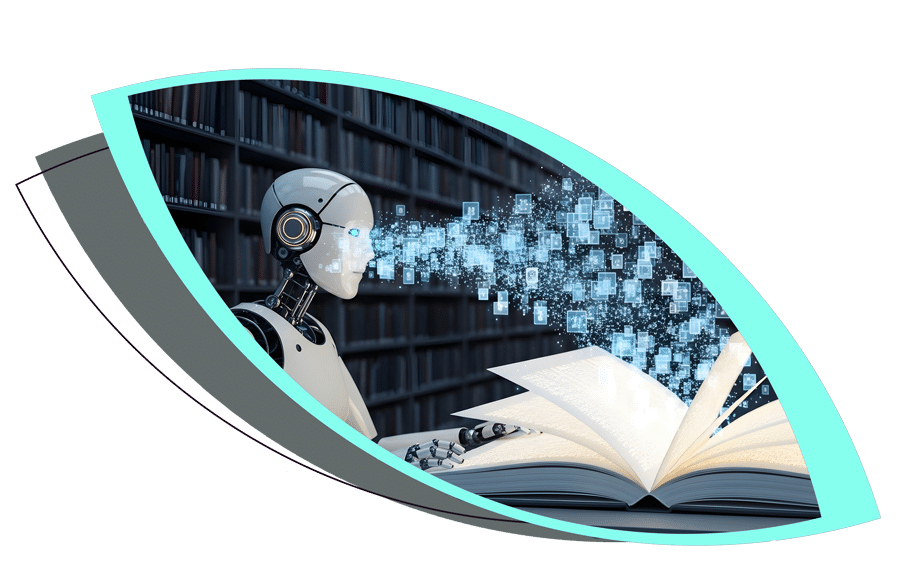 Human researchers are brilliant but also deeply human. They get tired, distracted, or consumed by incentives that push them toward “big wins.”
Publishing a paper on a novel law of physics is far more prestigious than running exhaustive simulations to confirm every corner case of an already well-established theory.
Diving into neglected proteins that don’t look glamorous won’t win a Nature cover.
But ask an AI to do these things? It doesn’t get bored. It doesn’t complain that parameter sweep #59,493 looks just like #59,492.
It can track, compare, and cross-reference at a scale no human could hope to match.
And crucially, it can alert us to patterns hiding in neglected corners of data, connections across obscure papers, or incremental opportunities too tedious for human curiosity to sustain.
If most of science progresses by applying known principles carefully and thoroughly, then AI offers something radical: a turbocharged patience machine.
Incremental Isn’t Insignificant
Incremental science often gets unfairly maligned. In reality, seemingly small results can accumulate into transformative new capabilities.
Think of the decades-long refinement of climate models, which now influence global policy. Or the systematic cataloguing of human genes, which made possible the biotechnology boom.
The kind of work AI can accelerate isn’t flashy but is foundational. Imagine systematically solving every “trivial but unfinished” problem left in the literature from the past hundred years.
Thousands of loose ends could be tied up in months, where previously they would have languished across forgotten conference proceedings.
Fields Ripe for AI Gap-Filling
Let’s get specific. Where will this “gap-filling” role matter most?
1. Drug Discovery and Biomedicine
Pharmaceutical science is full of abandoned explorations.
In the pursuit of blockbuster drugs, companies often discard promising compounds because testing every pathway is prohibitively time-consuming.
 AI can resurface and repurpose these neglected areas.
For instance, recent AI models in protein design have been able to suggest binding sites that human researchers skipped because they looked unpromising or were “too boring to pursue.”
Re-examining families of proteins that haven’t been fashionable in decades could yield overlooked therapies for infectious diseases or rare conditions.
AI isn’t inventing whole new biology; it’s shining light into corners that were merely underexplored or forgotten.
2. Materials Science
 High-throughput simulation has long been used to search for new materials, but only in a limited, human-directed way: researchers pick plausible candidates, then simulate a subset.
AI can extend this dramatically. By rapidly traversing neglected regions of chemical composition space, AI systems are finding novel high-temperature superconductors, catalysts, and battery chemistries.
These aren’t alien new principles. They are simply applications of existing quantum-mechanical and thermodynamic rules explored far more exhaustively than a human team could manage. This diligence is where AI shines.
3. Climate Science
One of the toughest challenges in modelling climate dynamics isn’t the big ideas, we know the greenhouse effect works, and we know emissions drive warming.
 The hard part lies in parameterisations: representing clouds, aerosols, ocean eddies, and countless small-scale effects in global models.
Traditional HPC simulations explore slices of these parameter spaces, but it’s impossible to cover them all.
AI can methodically map these “missed regions,” refining estimates, reducing uncertainty, and giving policymakers better confidence in projections.
No headline-chasing here. Just a deeper, more complete picture of a system we can’t afford to misunderstand.
4. Mathematics and Computational Science
Mathematics progresses not just via grand conjectures and proofs, but with countless “folklore results”, plausible claims never formally tested because no one had the time or patience.
AI can chip away at these systematically, generating candidate proofs, counterexamples, or exhaustive computations.
It’s not Hilbert’s dream machine, but a dependable lab assistant that never gives up on the problem sets humans got bored with.
Over time, this could tidy up whole swathes of mathematical landscape long left ragged and uncertain.
A Cultural Challenge: Rethinking Prestige
If AI does excel at gap-filling, are we prepared to value that kind of contribution appropriately?
Scientific culture, from journals to funding agencies to tenure committees, tends to glorify novelty and penalise incrementalism.
“Yet another parameter sweep” rarely wins citations. But what happens when AI makes parameter sweeps not just trivial but profoundly useful?
The risk is clear: if we cling to outdated prestige metrics, we’ll overlook AI’s most natural strength.
The opportunity lies in updating our culture to see thoroughness not as dull, but as essential.
Completing maps of scientific landscapes is arguably just as valuable as planting flags on new peaks.
It’s unlikely that AI research will be fully autonomous at any point soon, so attribution for these results is still likely to be given to the human in the loop.
Why Traditional HPC Must Embrace This Shift
High-performance computing (HPC) has long been the workhorse of scientific progress, powering breakthroughs in weather modelling, molecular dynamics, material science, astrophysics, and more.
But HPC workflows, being resource-intensive, are often guided by human heuristics: only explore the “interesting” or “promising” regions because computing every possibility is infeasible.
AI flips this constraint. By steering and accelerating simulations, AI makes thoroughness possible, turning exhaustive exploration from a dream into a practical workflow.
This represents a cultural shift for traditional HPC communities: embracing AI not as an HPC competitor, but as its most powerful ally.
The call-to-action is simple: if you’ve built your career running simulations on supercomputers, don’t view AI as a flashy, hype-driven distraction.
See it as the missing ingredient that turns expensive, selective exploration into complete exploration.
Toward a More Methodical Future
Will AI cure cancer? Maybe someday, but probably not in one bold leap.
Will it solve climate change? Again, not with a single dazzling insight.
But what AI can do and is already beginning to do is exhaust the opportunities that humans have left unfinished.
It can mine, cross-reference, and systematically complete the scientific record with a patience we never had.
That’s not second-class science; it’s the science that makes real breakthroughs sustainable.
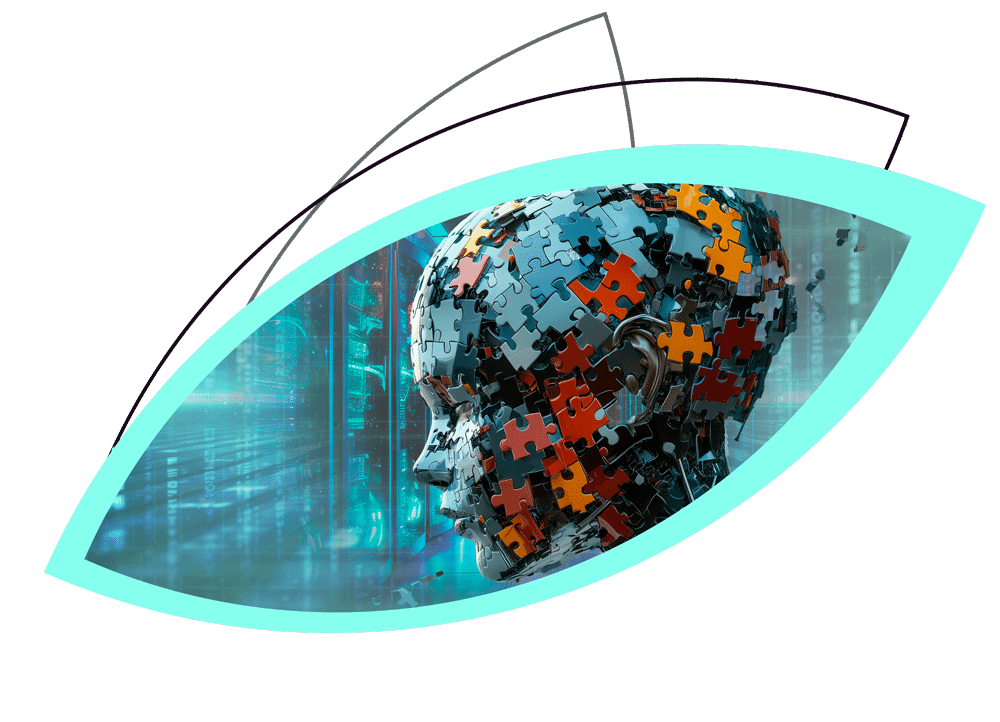 As we marvel at AI’s potential, let’s stop asking only: what world-changing discoveries can it make?
We should also ask: what unfinished work can it finally complete?
Because sometimes, filling in the gaps isn’t the side-show. It’s the main event.

Dairsie Latimer
Technology Fellow
Red Oak Consulting