
What Will the Next 5 Years Bring?
Wildfires are one of the few public decision‑making contexts where delays have immediate and irreversible physical consequences.
Historically, fire spread paths were predicted by (very clever) humans analysing different impact variables: fuel, weather, terrain, etc.
The human-based strategy faced a high exposure to error, but was better than the technological alternative: high‑fidelity wildfire models that ran too slowly to be operationally useful.
The early 2020s saw a massive technological breakthrough, with the rise of HPC-enabled AI.
High-Performance Computing could be used to 3D map enormous swathes of land and generate large volumes of high‑resolution fire simulations, and AI could be trained on these inputs in order to generate results almost instantaneously.
These models consequently ran fast enough to support decisions while the fire was still active.
 Now, firefighters in California deploy these models almost every day to predict both when a wildfire will break out and how it will spread once alight.
This pattern, whereby HPC generates high‑fidelity representations of complex and highly multifaceted systems and AI learns fast approximations of those representations, is not specific to wildfires.
It is a pattern emerging across public sector domains where policy outcomes depend on decisions made under high degrees of uncertainty, cost and/or time pressure.
Two particular examples of where else HPC-enabled AI could start progressing public policy in the UK over the next 5 years have caught my eye.
Digital twins
Where things are now
In the UK, digital twins are currently best described as an emerging capability. If they appear at all, it tends to be in a very nascent, very specific, problem‑driven form rather than as general‑purpose, HPC-led, decision platforms.
For example, Manchester University NHS Foundation Trust has a digital twin covering six hospitals, providing a single 3D model of buildings, rooms and assets, specifically to support estates management and the resulting safety decisions.
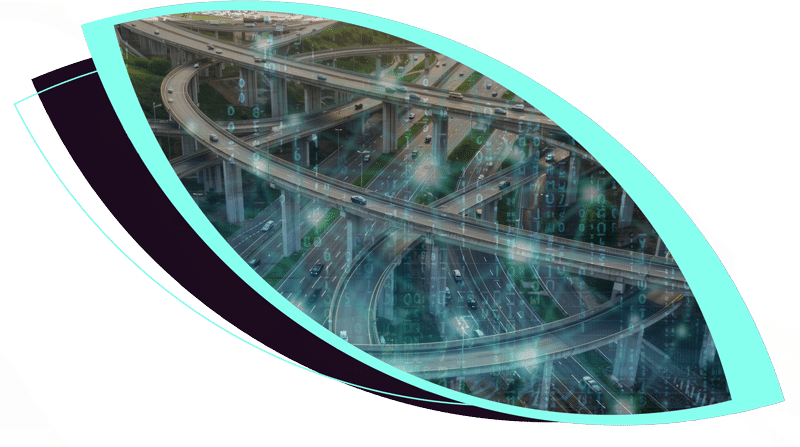 Similarly, in transport, National Highways is developing digital representations of the strategic road network to support maintenance, resilience, and long‑term planning.
These systems are delivering value, but they are currently very narrowly scoped and very technologically nascent.
Why? Because system‑level modelling and analysis are still computationally hard.
Once you move beyond a single asset into interacting systems, e.g. crowds vs transport vs weather vs behaviour, models become expensive to run, slow to update, and difficult to keep aligned with reality.
The options as they stand currently are massive technological investment or simplify aggressively, limiting governments to bounded, well‑understood problems rather than whole‑system dynamics.
Where this goes in five years
Over the next five years, this constraint could very well ease as HPC-enabled AI becomes more mature and more accessible. Instead of modelling roads, crowds, or estates in isolation.
The UK government could begin to explore how these systems interact.
That makes more intertwined use cases feasible: stress‑testing crowd‑management strategies during major protests vs live transport disruption; assessing how new housing developments reshape traffic, emissions, and emergency response together; or evaluating how weather, behaviour and infrastructure compound risk during extreme events.
The role of HPC
Much like with the wildfire example, HPCwill be integral here because it allows complex, high‑fidelity simulations to be run once at scale and then reused.
HPC generates the expensive, system‑level understanding, e.g. how traffic, transport, weather and behaviour interact, while AI learns fast surrogates of those results, so the same questions can be explored repeatedly without re‑running the full set of equations each time.
Antibiotic resistance
Where things are now
Antibiotic resistance is one of the most foreseeable problems in modern medicine. It is also one we have made little progress on. Interestingly, the reason for this is only partly scientific, but also economic.
 When a new antibiotic is discovered and developed, clinicians restrict its use in order to delay its own eventual resistance. This is a decision that, of course, makes clinical sense, but it also creates unintended market responses.
The upfront cost of drug discovery is historically enormously high, and as a result, this setup of restricted use means that return on that investment is low.
This has led to a large fall in private investment. Many large pharmaceutical firms exited antibiotic research entirely, and the pipeline for new drugs has dried up.
We are now dealing with bacterial infections that are resistant to all approved antibiotics.
HPC enabled AI changes the cost and speed of discovery and democratises the research.
Historically, the first major barrier was simply identifying a viable candidate molecule, which entailed years of laboratory work, screening compounds one by one against bacterial targets, with most attempts failing.
Computational models compress that stage sharply. They can evaluate hundreds of millions of candidates in silico and surface molecules that would never have been prioritised using traditional approaches.
This has already happened in practice. In 2020, researchers at MIT used a deep learning model to identify a compound later named halicin. It had originally been studied as a diabetes drug.
The model flagged it because it showed strong activity against several highly resistant bacterial strains.
It did not resemble existing antibiotics, which is part of why it had been overlooked. The model was not simply extending known chemical families, as human researchers typically would.
Where this goes next
HPC could be instrumental in solving this market failure, as it offers a significantly lower cost of discovery. However, finding new molecules is only part of the problem. The second issue is the eventual resistance that follows the antibiotic discovery.
Historically, drug development has been reactive. A drug is deployed, resistance appears, and the cycle repeats.
The next step is to model resistance before deployment rather than after. The question is not only whether a molecule works, but how bacterial populations are likely to adapt to it over time.
This requires simulating evolutionary dynamics across large populations of bacterial variants under different treatment conditions.
The computational cost is high, but it is increasingly manageable.
Why HPC matters
The main reason this has not been done at scale is the size of the problem. The number of possible candidate molecules is extremely large. The number of bacterial protein variants and evolutionary pathways multiplies that further.
Standard computing infrastructure struggles not because it is slow, but because it is not designed for this kind of workload. These models require large memory, tight coupling between calculations, and extensive parallelism. Without that, many of these simulations are not feasible.
HPC does not just reduce runtime; it also makes certain analyses possible at all. In this case, it determines whether resistance can be modelled in advance or only observed after the fact.
The common lesson
Wildfires demonstrate to us tangibly that when HPC-enabled AI drives faster, more accessible analysis, system-altering changes can be made, and benefits drawn.
 Over the coming 5 years, I believe the same dynamic will increasingly become visible in digital infrastructure planning, drug development, and public health.
There is no doubt that HPC-enabled AI works at solving public policy issues, and the technology will only continue to develop from here.
The question for governments is whether they are prepared to invest in the infrastructure, governance, and skills required to use it on an economy-wide scale.
Relevant links:
ARPA‑H antibiotic discovery project
Springer Nature AMR / sustainable AI article
ASM article – Harnessing AI for antibiotic discovery

Lili Thomas
Strategy Director
Red Oak Consulting